the story isn’t over yet

Have you ever had the thought, “What if this is the way things will always be?”

So often, especially when we find ourselves in a season of waiting, we start to think things will never change. Like a week of rain and gray skies causes us to forget how a clear, sunny day feels on our skin. Like the way fog settled in over Mount Rushmore just before my friends and I arrived, made us wonder if the carved rock faces actually existed behind all those clouds. Obstructed or incomplete views have a way of causing us to doubt that the picture will ever be whole.

Misplaced hope keeps us thinking that things won’t be better until our circumstances change. Discouragement, if left unchecked, can lead to a paralysis – an inability to look up from the ground we are staring at as we walk. And when we lose both hope and the ability to think about more than what’s directly in front of us, we might think the story is over.

I remember exactly where I was when I saw the Facebook Messenger notification.

Eric and I had just landed in Seattle after leaving Juneau early in the morning, on our way home from the Cru Summer Mission we were staffing this past summer. I was waiting with our luggage outside the bathrooms and checking my phone after having it turned off for the flight. I was startled to see a message notification from an elementary and junior high classmate whom I had not spoken to probably since 2003 or 2004. Moreover, we weren’t necessarily good friends. In a small school, you were “friends” with everyone, but this friendship involved a lot of turmoil and hurt.

Any time I share my story with new friends or with college students, a prominent area in my life where I explain God’s hand at work is my struggle with healthy friendships in my growing up years. I felt very lonely in junior high and high school (due to many circumstances, not just this one relationship), and some dramatic seasons in our junior high class of 20 or so students led to personal struggles with insecurity for the next several years. However, I also share in my story that God used these times of isolation to draw me closer to Him. I felt like I couldn’t depend on the people around me, but I learned that God was constant and loving and faithful. He helped me to develop an identity apart from people, and I learned to fight the thoughts of insecurity. My parents prayed with me all through high school that God would prepare good, spiritually-encouraging friends in college, and He blessed me in incredible ways in this area once I stepped foot onto the University of Arkansas campus.

However, the story is never over.

This friend was contacting me to apologize – something I never would have expected. She shared with me how God had worked in her life over the past several years and how He had kept me on her heart and she felt like she needed to ask for my forgiveness. She worried that she would be opening old wounds by contacting me, but really felt like she needed to reach out to me.

My breath caught in my throat as I read her words. What kind of amazing maturity and life change does it take for someone to apologize almost 15 years later?!

God had worked in me years beforehand to help me let go of the pain and use the story for His glory, to connect to other women who also struggle with friendships and letting go of hurt, so I shared with her how God had used the situation in my own life for development and in others’ lives for His glory. I also apologized for ways I most likely handled it the wrong way, letting jealousy get the best of me — and just like that, I had a new friend.

Now, I have a new facet of my story to share with others: God is always at work in the redemption process.

We can’t always see what is going on in the other side of the story. God was reaching this friend in one way with her bullying and He was reaching me in another way with my insecurity – and, honestly, He was pruning out some self-righteousness as well. He was at work in both of us – but we weren’t at a place to see that yet. Now, though, we both have the joy of seeing a new perspective in God’s faithfulness to use our mistakes for good.

Let this encourage you, friend: Your story isn’t over yet.

Whether you are wrestling with pain from someone close to you, or recovering from the death of a loved one, or walking through discouraging job situation, or waiting for God’s provision in a spouse or a baby – this isn’t the way things will always be.

Not that you will get exactly what you want. Not that life circumstances will change to line up with our plans. But our hope is not in the change in our circumstances but in God’s faithfulness to continually redeem this broken world for His purposes. We can trust that even after 15 years, He can bring clarity to the story and He can open up new understandings in which our only response is to fall at His feet and praise Him for how good He is.

He is still changing you and me, and often His method is to use our life circumstances to refine us. Psalm 66:10-12 says,

For You, God, tested us; You refined us as silver is refined. You lured us into a trap; You placed burdens on our backs. You let men ride over our heads; we went through fire and water, but You brought us out to abundance.

He is at work to bring us into the abundance we experience when our hope is fulfilled in Him. He is perfecting us through each situation (James 1:2-4), and even when it feels like we don’t know where He is or how He could be present in the situation, “He knows the way that I take; when He has tried me, I shall come out as gold” (Job 23:10).

Wherever you are today, don’t give up. Your story isn’t over yet.
joy in advent’s dependency

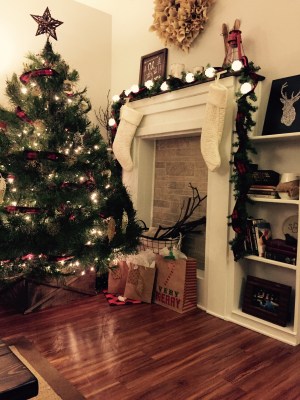
We cut down a Christmas tree and decorated it two weekends ago. I decked out our new mantle, as well, with red and black plaid ribbon woven into a cheap fake garland (ribbon added to hopefully make it look less scrawny). Christmas music is a background soundtrack each evening, and in that sense I feel “ready” for the holiday.

FullSizeRender (1)

In a deeper sense, though, I am ready for advent.

Advent feels sweeter to me this year, and I don’t know why, other than crediting the Lord for preparing my heart for this season. In the past, I have loved the idea of being intentional to celebrate Advent with devotionals and candles and liturgies. And yet I always look back on December wondering why it wasn’t as spiritually enlightening as I wanted it to be.

But this year, I find myself longing to move from idea to experience, to savor Christ in a season all about the longing and the wait.

The longing for what is coming but is not here yet.

As I dive into Scripture this month, I more clearly notice the yearning and the groaning of Israel for redemption, which has been promised throughout the Old Testament. A Redeemer to bring peace to a nation whose history has been riddled with conflict and exile and rebuilding and darkness. A Rescuer to provide salvation. A Righteous Ruler to restore what has been broken.

In Advent, we focus on the coming of Christ, waiting for the celebration of Christmas as the Israelites waited for Jesus’ birth, then as they (unknowingly) waited for Jesus’ death. We also find ourselves still waiting for Jesus’ return and the total fulfillment of this broken world being redeemed.

Advent has been fulfilled and yet – in another sense – has yet to be finished.

And as we wait for the redemption of this world, we experience hurt and sorrow and unmet desires. John Piper said, “God prepares a person to receive Christ by stirring up a longing for consolation and redemption that can come only from Christ.” It’s easy to look around at the world around us and recognize that things aren’t as they should be, and the hard yet beautiful thing about this is that it draws us to a deeper place of aching for Christ’s return and rescue.

Something I am appreciating about waiting is that it forces me into an awareness of my dependency and my lack of control.

In waiting, we declare a dependency on something or someone else.

Waiting takes place when we have a goal or destination but something is preventing us from getting there. Whether it is waiting in traffic on I-49 after work or waiting for a new job or waiting to get married or waiting for your marriage to get better, there is some factor outside of our influence that causes a delay.

{This is going to get personal.}

We are waiting to get pregnant. Have been “trying” for eight-ish months at this point. I quote-unquote due to the odd terminology of the verb “try” for the desire to start a family. From our experience, so far, I am realizing that it is less about trying and more about giving God an opportunity to work, because trying indicates a level of control I have realized we don’t actually have.

While I have hinted and briefly mentioned examples here previously, I haven’t wanted to incite sympathy for this current path we are walking. I have wanted to avoid people responding to my words with advice on what we should change to make conception easier, or in response have you experience a saddened emotion when you think about the Barneses. Because, as it is, I feel joyful when I think about what God is doing. And I love even getting to celebrate with friends who are getting pregnant.

Because, while it honestly is in the front of my mind a lot, our story is much bigger than that desire.

During Advent, as I have reflected on waiting and longing and the lack of control, I have experienced an incredible peace with our circumstances. Emmanuel, God with us, has felt so tangible to me. This doesn’t mean that I haven’t experienced sadness. In fact, for someone who is way more “thinking” than “feeling,” the sadness has been one of the hardest parts for me to manage. I have always thought that, if I trusted God, my emotions would agree, and I wouldn’t be sad.

But here I am, trusting God fully, yet more prone to weepiness than I ever have been. I normally have to understand something in my head before it reaches my heart, and this I don’t understand. Thankfully, I have enough “feeling” friends in my life who have helped me process through this and have validated me, relieving a fear I think I have unconsciously had in the past that feelings can’t be trusted.

In Advent, I am understanding the phrase used in Luke 2:25 where it says Simeon was waiting for “the consolation of Israel.” I am longing for the comfort, like John Piper said, that only Jesus can give. While I don’t expect God to always do what I want, I have experienced His consolation as He walks with me through every trial, every situation – including the unmet desires of my heart to start a family.

As we wait for our circumstances to change – and as we ultimately wait for Christ’s return – God walks with us through the wait. He reminds us that He is trustworthy and He is faithful to His character. It took several hundred years before the prophecy of Christ was fulfilled, so we know God has His own timetable, but we also know that He sustained the nation of Israel during that time. He will sustain you, too.

And while He may not answer your prayers in the way you want Him to, He will answer. He will show up. And He will use you in His grand story to make His name great.

So as you walk through this month of anticipation for Christmas and all that Christ’s coming means, think about what you are currently waiting for in your own life – then confess to God that you relinquish control to Him, because you ultimately can’t solve it anyway. Allow your wait to draw you into a sweeter dependency on Him, and expect Him to be present with you as you wait.

on being almost-27

Tomorrow is my 27th birthday.

I’m not sure where I thought I would be at 27 – it seems like an age with a certain amount of insignificance and monotony in the midst of being a 20-something. As I look back over the past 5-10 years, though, I can see that by 27 I finally feel like I have begun to “grow into myself.” 

High school was rough. I didn’t know how to be comfortable with who I was, and I was constantly seeking my identity in academics and activities and relationships, looking for anything or anyone who could tell me who I was and what value I added. Going into college, Anne Shirley (via L.M. Montgomery) put to words the tension in my mind – “There’s such a lot of different Annes in me. I sometimes think that is why I’m such a troublesome person. If I was just the one Anne it would be ever so much more comfortable, but then it wouldn’t be half so interesting.”

Each fall, I reread the first three books of the Anne of Green Gables series. I get lost in the daydreamy world of Prince Edward Island and the way Anne views the world around her. Each season of the year carries its own beauties and gifts. Every trial or scrape  with it her sense of adventure and a lesson well learned that helps shape Anne into the woman she is becoming. Perhaps this time of year more than any other finds my own heart daydreaming, narrating the world around me as maples and oaks change colors and discover new aspects of their own nature.

As with any other book series, it’s fascinating to observe the ways the author develops the characters and allows them to grow more and more into themselves. The reader gets a birds-eye view as he reflects on what he has read, a position I am learning to take more often in my own life to see how the Greatest Author has been developing my own character – and how I believe He isn’t done yet. “And I am sure of this, that he who began a good work in you will bring it to completion at the day of Jesus Christ” (Philippians 1:6).

In college, I really began to recognize how much I didn’t know about myself. I felt like I had lived within a “box” of who I was expected to be until I was 18, many of those expectations created by myself and how I thought others viewed me. Then college brought a bevy of new relationships and new decisions, forcing me to really identify what I wanted and what I enjoyed. This blatant recognition of not knowing myself acted as a shovel, the tool I needed to start digging into my own self.

“They keep coming up new all the time – things to perplex you, you know. You settle one question and there’s another right after. There are so many things to be thought over and decided when you’re beginning to grow up. It keeps me busy all the time thinking them over and deciding what’s right. It’s a serious thing to grow up, isn’t it, Marilla?”

After 27 years, I finally feel comfortable in my own skin. I feel like I know myself better than I ever have before. I have had enough life experiences and vastly different jobs to allow me to understand my personal strengths and weaknesses and preferences and sin tendencies. While there is much self-awareness that can be learned through personality tests and StrengthsFinders assessments, the most powerful teacher in the subject of “self” has simply been experience. New situations allow me to ask new questions, and both successes and disappointments have contributed to the shaping of my life.

“Oh, Marilla, looking forward to things is half the pleasure of them,” exclaimed Anne. “You mayn’t get the things themselves; but nothing can prevent you from having the fun of looking forward to them. Mrs. Lynde says, ‘Blessed are they who expect nothing for they shall not be disappointed.’ But I think it would be worse to expect nothing than to be disappointed.”

And not only can I see that I know myself better at this almost-27, but I know God better. The more time I spend with Him, and the more I find myself depending on Him daily, the deeper my intimacy with this Author. The more I can recognize His voice as a Writer, the more I notice the patterns and consistencies He weaves into my life. Yet, at the same time, I find that there is so much more that I don’t know about Him. The cliche proves true that “the more I learn, the less I know.” I am more keenly aware of the hugeness of God at almost-27, and thus I am more keenly aware that I can’t ever know it all. I see my brokenness to a greater extent in light of this holy, incomprehensible God, and this drives me to desire a deeper relationship than I even knew possible 5-10 years ago.

In reflection, I see God’s faithfulness throughout my story. Like any good author, He uses each aspect of the plot to beautify the story and to add depth to my character development. He creates scenarios that will aid the development of the story. He foreshadows a bigger picture in the story. Even if the revelation won’t occur for many chapters to come, He can be trusted as an Author.

“When I left Queen’s my future seemed to stretch out before me like a straight road. I thought I could see along it for many a milestone. Now there is a bend in it. I don’t know what lies around the bend, but I am going to believe that the best does. It has a fascination of its own, that bend, Marilla. I wonder how the road beyond it goes – what there is of green glory and soft, checkered light and shadows – what new landscapes – what new beauties – what curves and hills and valleys farther on.”

So as I enter my 27th year and carry new hopes and expectations into what’s in store, I am grateful for the character development God as Author has worked in me. I fully believe that He is sovereign over this story, and He can see the bigger picture of chapters to come that I won’t understand from where I am now. But, as Anne Shirley does, I am seeing the beauty of where I am now and content with the understanding I have been given up to this point. In another ten years, I expect to look back and see how much I actually didn’t know at almost-27.

walking through autumn

Autumn is such a paradoxical season in comparison to the rest of the year.

Don’t get me wrong – it’s my favorite. October holds the key to my heart, and I could pretty must camp out on my front porch and just listen all day to the sound of the wind chasing dried leaves across the sidewalks. When we were dating, I taught Eric to notice the scent fall carries with it. Not the pumpkin spice and apple cinnamon candle scents we all have filling our homes; it’s more akin to the married smell of dirt and sun-dried leaves.

But there is a marked difference between fall and the other three seasons of the year. Spring and summer are all about growth – what’s in bloom, what to plant, what new projects to start. We enjoy the vitality of the world around us during these months, everything seeming to be bolder and brighter and alive. And winter holds herself with a silence eagerly anticipating the coming spring and summer, holding faith that the world will be green once again. Chosen plants for the holidays are evergreens and poinsettias, things that live through harsh temperatures or lower amounts of sunlight.

But in autumn, we celebrate death. 

We earnestly desire for the trees to slowly lose life in their branches, the leaves changing hues in response to the dying in their veins. Foliage fades from green to yellow to brown as we excitedly watch from our windows or on morning walks. What is this inconsistency in perspective at this time of year?

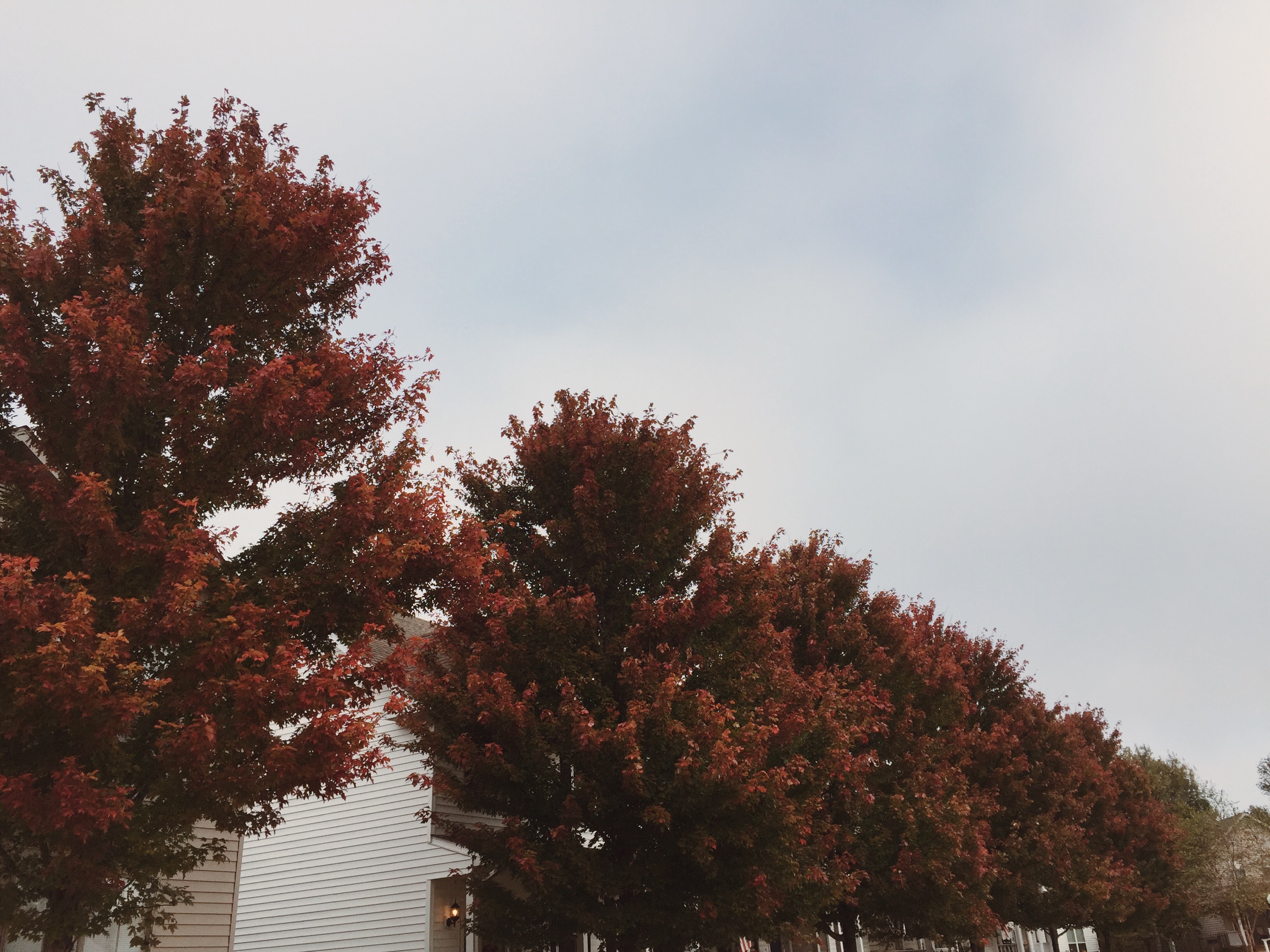
There’s something about how these trees die — they die well. They die in the best way possible, waving their multicolored branches in the afternoon sun as if showing off one to another who can die most vibrantly. They die slowly, evidenced by the maples in front of my house whose lower branches hold bright spring green leaves while the upper branches hold crimson and cherry tinted ones.

Ultimately, we can take joy in these deaths because we know their death is not the end. As the leaves let go of their branches and float to dirt,  we can savor the blissful crunching under our feet knowing that there will be new ones in their place next spring. This death makes way for new life, so we are able to enjoy this season. We don’t dread what spring will be like without these leaves. And maybe this is the secret to dying well – to hold the perspective that something new awaits, that the story is not over. 

While I eagerly await October each year, I admit I am less excited about the experience of death in my own life. As I think about death – to self, to desires, to plans, to expectations – I am not sure that I can say I typically go out with the same fanfare fall does. I cling to those leaves, my dreams, dreading the changing colors and, worse, the loss altogether. Autumn is all about the process, and we find beauty in her process, but so often when it comes to our own lives we want to rush the process and be at the end result.

As I look at the trees, which yield to the course of nature God has established, I wonder of my own life –

Can I die well?
Let go of what I hold as “mine”
Watch it change colors, then wither
(There’s beauty in that process)
Then let it go altogether
to drift freely down
And I, to contentedly stand bare
Anticipating another to take its place in time
A new leaf
Green and whole and bearing fruit

I think we dread death in our lives because we focus on the present crisis instead of the present beauty, and with that we forget the coming spring. We doubt the goodness of God in our losses and our disappointments, fearing if we let go of this we will be stripped forever. We forget that He promises to make all things new, to work out all for good, to fulfill the plans He has for us. And we don’t realize the beauty He creates as we surrender to Him and walk through the process of dying.

This fall, as I bask in the glorious weather and the grandeur of the world around me, I want to be drawn to the heart of God and reminded of His good in my own deaths, in the things I am slowly letting go of so that I may hold more of what He has for me. The story is not over, and new fruit will be produced in time. But for now, I want to enjoy the present beauty He brings even in walking through my own autumns.

a new understanding of how to be tough

I have never been the girl who was afraid of spiders.

At some point in my growing up years, I began to value being tough. I played football or basketball with the boys at recess (including tackle football, much to my dad’s dismay), I refused getting a shot at the dentist and dealt with the pain of a cavity filling, I avoided crying in public, and bugs became objects to smash, not flee.

One of my summers as a camp counselor, my cozy little cabin had a problem with daddy longlegs. All of the cabins were set up around a gravel road, and while I was in the culdesac with several other cabins, mine was set slightly more into the trees, so I suppose the creatures found our rustic home an easier refuge from weather, the screen door hanging just slightly off flush to give them a tiny little entrance.

On the first day of each new camp session, I would tell the girls that our cabin had pet daddy longlegs, that they didn’t need to be afraid but just needed to grab visitors by one of the spindly legs and toss them outside. Sometimes we would name them and scold them for continuing to come back. By the end of the week, even the most prissy of middle school girls would be flinging the bugs outside. I have several memories even of waking up in the middle of the night with the distinct feeling that delicate feet were strolling across my face.

But I was tough, and no three-inch, eight-legged bug was going to bother me.

In reflection, I have taken this approach to my life in general.

I am not sure when it started, but I have always seen fear as a weakness, and while I don’t judge you for your fears or think you are weak, I hold myself to some higher standard, that I am not allowed to experience fear for what the implications would mean in my character.

Recently I was asked about what scenarios trigger my fears when I think about pursuing dreams and calling. I claimed that I couldn’t relate to the question – that I had none. Then, as I started processing, I realized I do have fears – but I communicate them by using words like “struggle” or “obstacle.”

I don’t want to call it a fear. I like to control what I communicate and how others understand what I am walking through. I typically open up easily and embrace being vulnerable, but even that has an element of control to it. I end my confessions stating that everything is okay and I know God is sovereign, yadda yadda – even if I am struggling to connect that head knowledge to my heart.

It’s even less about putting on a tough front for others to see – I think it goes deeper into how I want to see myself, what perspective I use in my thoughts and how I control what I think is true about me.

The word “fear” invokes a sense of helplessness. However, when you phrase it as a “struggle,” that sounds like something you can fight against, that you can defeat. I like the idea of fighting. I don’t like the idea of being needy, of not knowing what to do next or not being able to accomplish what I put my mind to. I want to do it all, I want to be capable, I want to be tough. But, as Christians, that’s not what is expected of us or even how we should desire to live.

Susie Larson wrote, “Sorting through our fears and insecurities is essential to the process of maturing into a woman of significant faith. We give the enemy opportunity to trip us up again and again when we refuse to deal with our fears and insecurities. We miss out on the redemptive life when we shove our fears below the surface and put on a fake smile.” I don’t think I even realized that my smile has moments of falsity to it, that below the surface there are times when I am not okay and when I am helpless, but I am ignoring that feeling and convincing myself that I am confident.

I don’t know if you are like me and you often try to mask your fears by figuring out what you can do to ignore them or conquer them. Maybe you are really in touch with those things and you thrive in your dependency on God. I wish I could say that was me, but so often I want to have a relationship with God and walk alongside Him, but fight my battles on my own. I feel like that should be the mark of my spiritual maturity, that I have learned how to overcome. But the success of my battles is ultimately dependent not on my efforts, but on my training in allowing it to be God’s efforts.

We can’t deal with our fears on our own. We can’t see our struggles as something to prevail over by working harder or suppressing feelings of anxiousness. My toughness is less dependent on my abilities and more dependent on how I rely on God in the midst of something I can’t control. 

Let me restate that.

When I confess that I am out of options, when all I can do is fall to my knees and ask God to step in — then I rest in Him while He is fighting for me — that is toughness. Resilience to believe in what He is capable of and being okay with having no control myself.

I have always feared the idea of being needy, but I am now learning that I need to fear not understanding my need.

Praise Him Who fights for me, Who is patient with me, Who has grace waiting when I find myself exhausted and defeated.

giving up – in a good way

I carry a great weight.
I have a feeling that you might carry it too.

I feel it in my skin. I know that’s vague, but my skin has this heavy feeling. Each breath takes additional energy these days for the rise and fall of my chest, pushing through what seems to be holding everything down.

I sense it in my smile. While usually genuine, I have moments when I release the smile and realize it was forced, a mask to not just convince those around me, but to convince myself that everything is okay.

Why do I have to convince myself of this?
Do you ever find yourself thinking, “I am a failure” or “I can’t handle it all”?
Are you afraid that you are one big fake, and someone is going to find out sooner or later?
Please tell me I’m not alone.

I never consciously tell myself I am a failure. But I know I am wrapping up that one awful word – failure – in colored tissue paper of trying harder and pushing through and attempting to juggle more than I can keep in the air.

And as I try to think back to a time in my life when I didn’t feel this way — I can’t. In high school, I felt lonely, so I spent all my energy trying to meet high standards in school and sports, hoping that would lead to contentment and identity and worth. In college, I saw my grades and my relationships and my ministry as a result of my own striving, leading to senior year burn out and wondering what it was all for, what it meant about me.

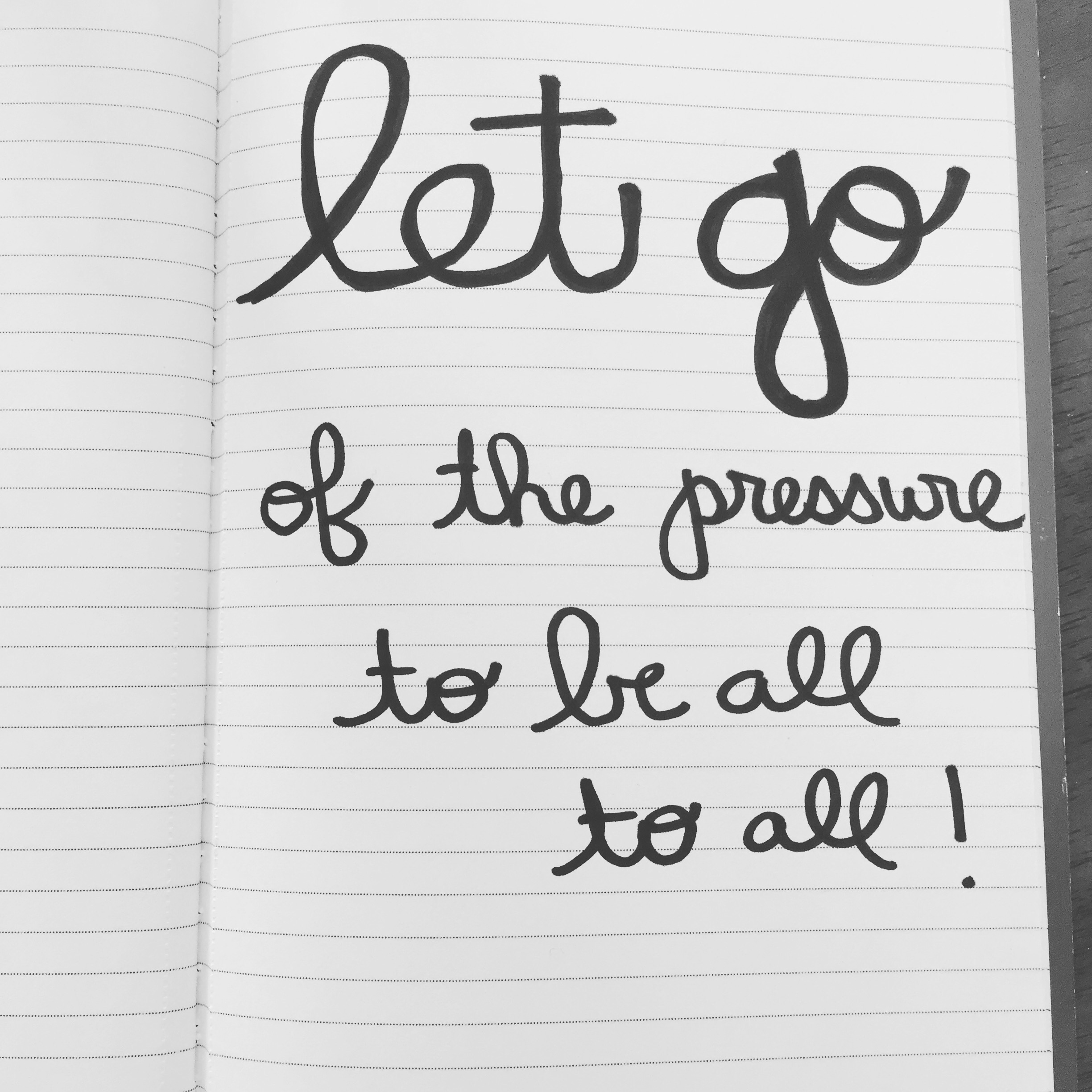
A breeze blows across the patio, and I feel it slowly coax away the weight. I write these words on paper, ignoring the restrictions of lines on the page: Let go of the pressure to be all to all. I see the silliness in that concept – how could someone be all to all? But I didn’t realize that was the weight I was carrying until my pen revealed it in ink. Big and bold and curvy, I trace and re-trace the letters.
I hear God – maybe not audibly, but I hear Him in how my thoughts continue to unwrap this statement. Stop thinking that it’s all up to you – to maintain friendships, to manage your home, to make progress at work. Let go. Breathe out the weight, breathe in grace.


How self-centered is that, to think that I am the one who makes it all happen? “I am the only reason I have friends and those friends feel loved. My efforts are needed to keep the world going round. I am the answer to all of the questions being asked.” Not only is that egocentric, but it is too much pressure for one person to hold. Do you recognize that for yourself, too? It’s okay that you can’t carry it all, but I know you are still trying. No wonder we feel our souls collapsing into depression or anxiety or workaholism or addiction in its various forms.

As much effort as I exert in each area of my life, I feel like I am failing somewhere. I can’t make straight A’s. And I am sick of feeling like I am failing when I am exhausted from trying so hard.

“In Him we live and move and have our being” (Acts 17:28).

Your very breath that indicates life is breathed because of Him in you. Even the most basic of life requirements is not something that you can accomplish on your own – and that should bring freedom.

So I am making the conscious decision to give up. To confess to the world and – more importantly – to myself that I cannot do it all. I want to relish the grace available in this confession. I want to immerse myself in that grace like a child who has just raked a yard full of leaves together for the sole purpose of scattering them with that one jump. It doesn’t quite make sense, as she will probably have to rake them again, but it’s not about efficiency or logic. The beauty of grace is that it doesn’t make sense, but it is a gift meant to be enjoyed.

I am going to breathe more easily this week. I am going to surrender to my own limitations. And I am going to jump all in to grace, watching leaves fly and laughing in the child-like freedom found in grace.

what freedom feels like

IMG_5289I woke up two hours earlier than normal this morning, and after 30 minutes of trying to fall back asleep, I finally got out of bed. The crickets and cicadas are louder at this hour, and the quiet of the world has been begging me to stop and listen. To create space for thoughts and musings and maybe some written words to cling to for the day.
 

I think most of us crave words in ways we don’t realize. There are words during different seasons that seem to resonate with our hearts – whether it is one that provides hope in the midst of darkness, or safety during uncertainty, or promise when it seems like nothing is going right. It doesn’t even have to be a word contrasting to life; we can fix to words like joy and faith and intentional when we feel like we are living in those places. These words can come up frequently in every day conversations or books we read or prayers we find ourselves praying. They have a way of following us around, revealing themselves when we need a reminder or when we are looking for affirmation. We seem to love emblems and themes we can recognize in our lives – maybe it helps us feel that there is a purpose in this world, that there is a Master Planner Who is in control and working all things according to His design.

The crickets and cicadas have been a theme for me during these past couple of months. I hear them at all times of the day in all different states of my heart – rest or chaos. When I think about these insects, I find myself grateful for the ways the world is humming around me and following a pattern of seasons even when my life seems all over the place. I hear the chirps and am compelled to sit and think and be. I am curious by the ways I can’t see them, yet their voices come together in a way that you can’t miss what they are singing.

Another concept that seems to follow me around is freedom. I am finding this word constantly, or maybe it is finding me – in my conversations, in the books I am reading, in the Scripture I am processing, and in the goals I am recognizing for myself as a writer and as a person.

Freedom.

With this word comes its own set of questions. What really is freedom? How do we get it? How do we know if we are living in it? Is there something I am not experiencing freedom in, or it is just a word that I need to savor and store for a later time?

I love the way Toad describes freedom in The Wind in the Willows:

Sitting up, he rubbed his eyes first and his complaining toes next, wondered for a moment where he was, looking round for familiar stone wall and little barred window; then, with a leap of the heart, remembered everything–his escape, his flight, his pursuit; remembered, first and best thing of all, that he was free!

Free! The word and the thought alone were worth fifty blankets. He was warm from end to end as he thought of the jolly world outside, waiting eagerly for him to make his triumphal entrance, ready to serve him and play up to him, anxious to help him and to keep him company, as it always had been in days of old before misfortune fell upon him.

Now, Toad is an extremely narcissistic character in the story, so his view of freedom is completely wrapped up in how the world can best benefit him and serve him. He has escaped from jail, and he thinks the world is now open and ready and waiting for Toad to return to it. And I have a feeling that Toad is spot-on when it comes to what freedom feels like, but it wrong when it comes to what it actually is.

I was talking with a couple of college students last week about the Gospel, and as we read Ephesians 2:8-9, I found myself talking about this concept of freedom.

For by grace you have been saved through faith. And this is not your own doing; it is the gift of God, not a result of works, so that no one may boast.

I see freedom illustrated in this grace – that the Christian life is not up to us. Our salvation is not reliant on our ability to earn it and achieve it. Our joy is not a result of trying hard enough to live in a perpetually happy state of mind. The hope we have in eternity does not depend on what we can do. All is a result of grace. And the weight I hold in myself comes off.

I think of freedom in the way that Christian probably experienced it in The Pilgrim’s Progress.

Now I saw in my dream, that the highway up which Christian was to go was fenced on either side with a wall; and that wall was called “Salvation”.

“In that day shall this song be sung in the land of Judah; We have a strong city; salvation will God appoint for walls and bulwarks.” Isaiah 26:1

Up this way, therefore, did burdened Christian run; but not without great difficulty, because of the load on his back.

He ran thus till he came at a place somewhat ascending; and upon that place stood a Cross, and a little below, in the bottom, a sepulchre. So I saw in my dream, that just as Christian came up to the cross, his burden loosed from off his shoulders, and fell from off his back, and began to tumble; and so continued to do till it came to the mouth of the sepulchre, where it fell in, and I saw it no more.

Chills run across my arms and legs as I reread those words. As he ran to the cross, ignoring the weight of what he was carrying, it just fell off.

This summer, en route to Alaska, I found myself doing what I hoped I would never have to do: running through the DFW Airport with a 65L hiking pack strapped across my shoulders, my back, my waist. Honestly, it wasn’t so much even running as it was hunched-over waddling at half speed. Or a slow-mo scene. If I were watching myself, I would have said it was unattractive and comical, so you have permission to laugh. It was even worse when I didn’t make it to my gate in time and I burst into tears, mostly from the stress of running across the airport and the disappointment in missing that flight – but let me tell you, I was in pain.

When I try to picture what initial freedom looks like, I picture, like Christian, running up the hill towards the cross, eyes fixed solely on that destination, and the Lord loosening the multitudes of straps holding that pack to my body. The feeling of the pack slowly slipping off and having no concern for what is happening except that I am getting closer to the feet of my Savior. What joy, what gratitude would result from such an encounter!

I don’t know what burden you might be carrying right now, what is weighing you down and jailing your soul. Or maybe you aren’t carrying a pack at all – the straps have already loosed and fallen off, but you have forgotten the weight of the pack and therefore the weight of gratitude for the One Who removed it.

I think I am still trying to figure out exactly what freedom is for me — but I know what it feels like.

lena love story

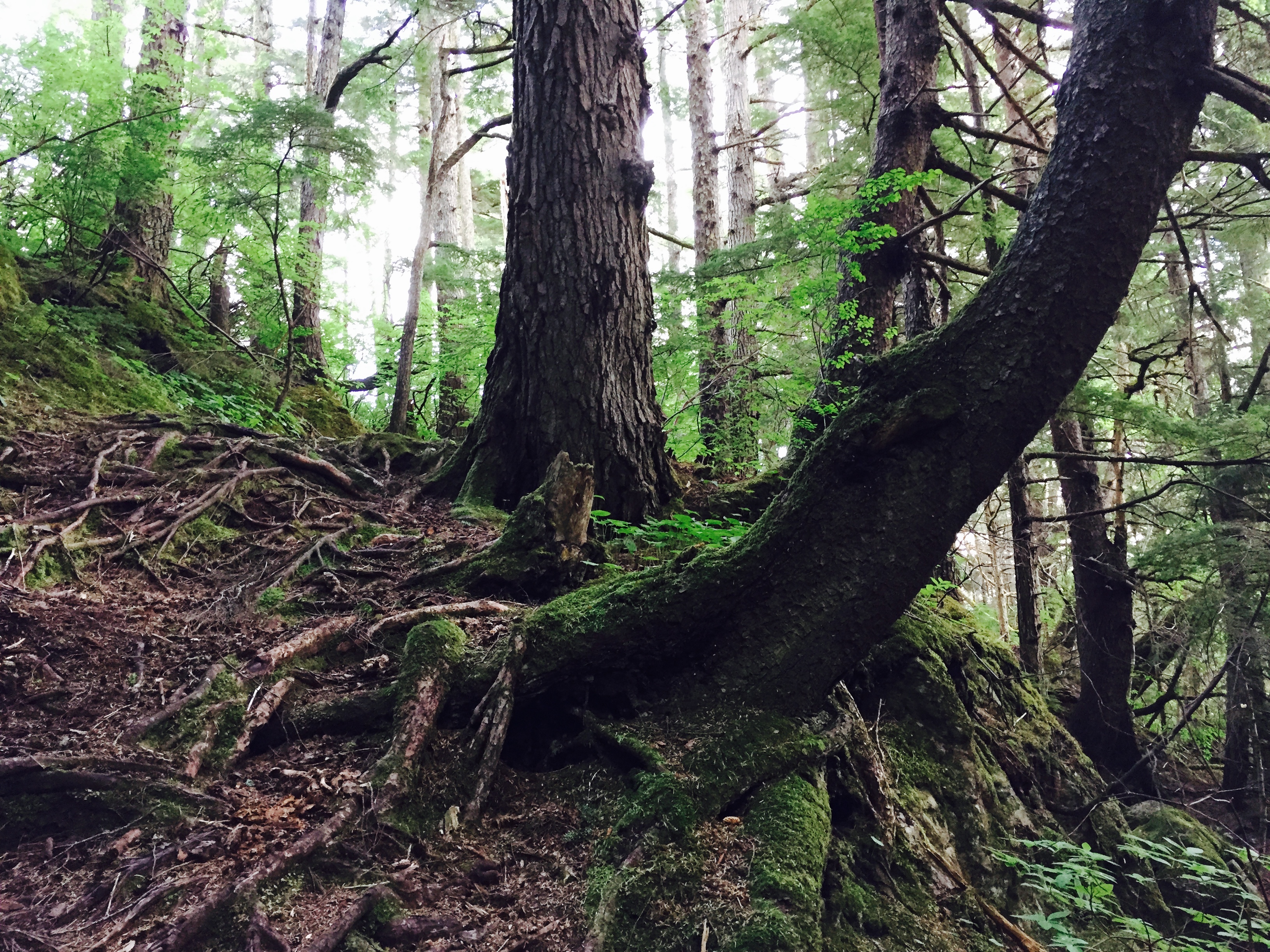
Moss and sponge-y dirt coat forest floors as we hike through the closest I have ever been to Narnia. Gnats scatter like pixie dust in the rays of sunlight peeking between tree tops, and our eyes focus on tangled roots I am just waiting to see move and trip us, the tree planning to walk away. This is the perfect setting for a fairy tale, and I half-expect the eagles I hear calling in the trees to swoop down and land on someone’s shoulder.

IMG_4241

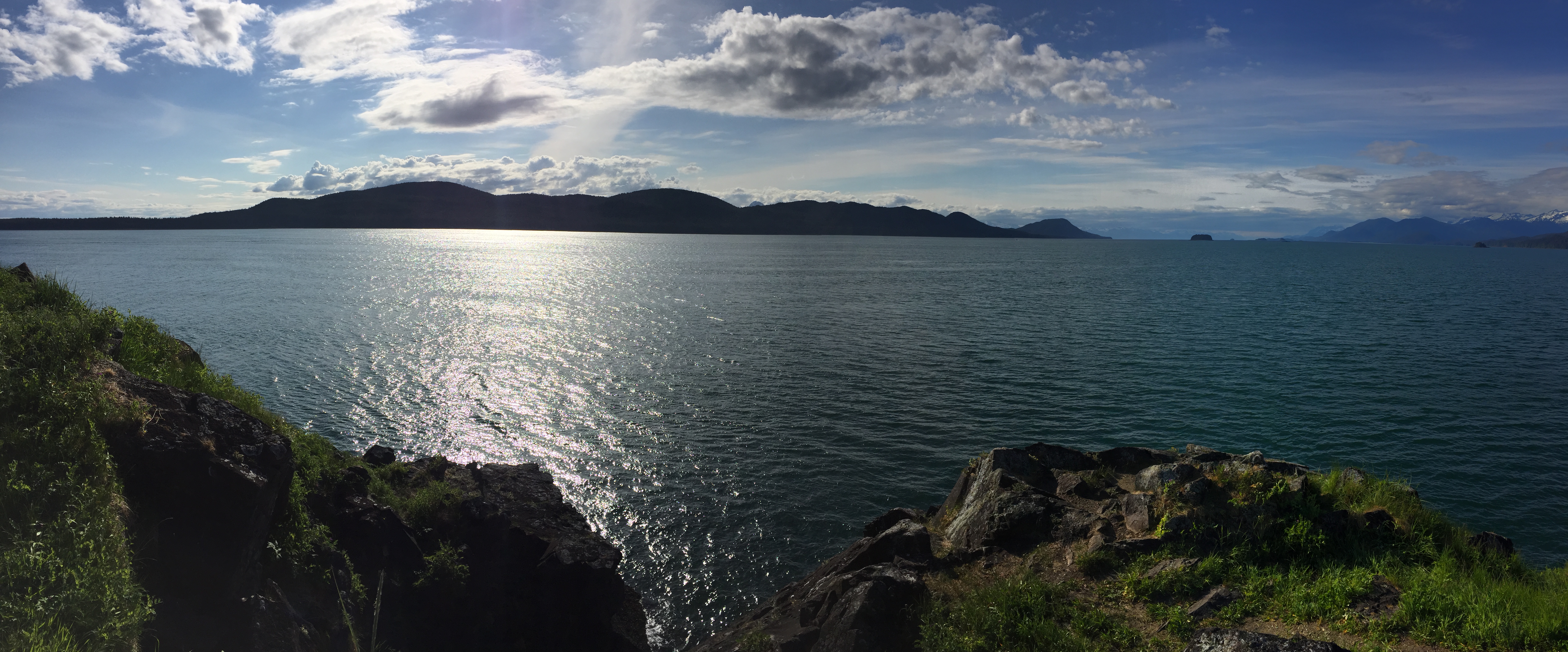
The path jumps up, then curves around the coast. Glimpses of rocks and water tease us, but as we push through the trees a magnificent view comes into focus. Seaweed and barnacles cover rocks below as the wake of a distant passing ferry gently crashes, the faint smell of salt lingering in the air. A lone sailboat has the cove to himself, and we watch from lichen-covered cliffs 20 feet up. Sunlight reflects off the water, slightly blinding my vision, but I can’t take my eyes off the blue color palette displayed in the waters and sky and staggered mountains in the distance.

A love story happened here.

Not the kind with a chance meet of two strangers in the woods.
Not a Romeo-and-Juliet-esq adventure of running away together.
Not the long-awaited wedding ceremony of a prince to his Cinderella.

But the kind of a Creator wooing a girl to Himself through His creation, her heart stopping in break-taking awe of the detail in every crest of water, in the spray emerging from slight shadows of whales hidden underneath the deep, in the opening of clouds to reveal the sun’s warm rays reaching for her legs.

The kind of love that catches your breath and races your heart, chilling skin with an audacious breeze and drawing her close like arms into an embrace. Safe. Secure. Content. The mark of true love. It continues to pull her near, His presence consuming her every thought.

Waves play tricks on eyes, teasing hope for a second glimpse of the whale.

His love is boundless, cannot be understood. His love is unconditional and foolish in the eyes of those who don’t understand. His love asks her to rest – not perform, not earn, not strive. And in that moment, she wonders why she ever thinks anything else matters.  All of the value of life is contained here, in Him.

IMG_4209

Yet once she leaves the cliffs of Lena, the memory of that moment fades. Not enough to forget the romance – you never forget your first kiss – but enough to cloud the clarity she once had about life and purpose and value.

Her heart longs to be on the cliffs of Lena again. Time seemed to stop in His presence. Those moments had a storybook glow, a picturesque quality unable to be contained in an Instagram post. Yet time does not stop, so she clings to the memories of that love and tries to push forward in a world where things are earned and lost and transient.

But it’s not that easy. One day, she finds herself breaking down as she feels the weight of all of the things she once knew didn’t matter but has since started carrying. The expectations she has placed on herself and the identity she has sought in her accomplishments have grown into something more than she can bear. In the midst of her tears and her racing thoughts, she hears a whisper of GRACE.

Was it possible that He was there, meeting her in the midst of the flood?

When you can’t carry it all, look to Me. I am here, in the everyday pieces of your life.

Her breath caught in her throat, then she slowly exhaled, feeling the beat of her heart calm in her chest. Maybe Lena was where the fairytale began, but life couldn’t stay there. Her failings and her attempts to do it alone wouldn’t negate the happily-ever-after she was hoping for; they would simply be a part of her figuring out how to find that happily-ever-after in ordinary moments and in ordinary ways. That intense, incomparable love had not ended but only changed scenes, showing up in little ways as reminders of what does matter and how she is loved.

Even after leaving Lena Point, the love story continues.

low tide at sunset

His mark is everywhere here.

I know it’s everywhere, everywhere – but here, it calls out to you, determined that you not miss a single detail. It’s almost as if the rocks and mountains and moss are crying out their praise; may my response be louder praise.

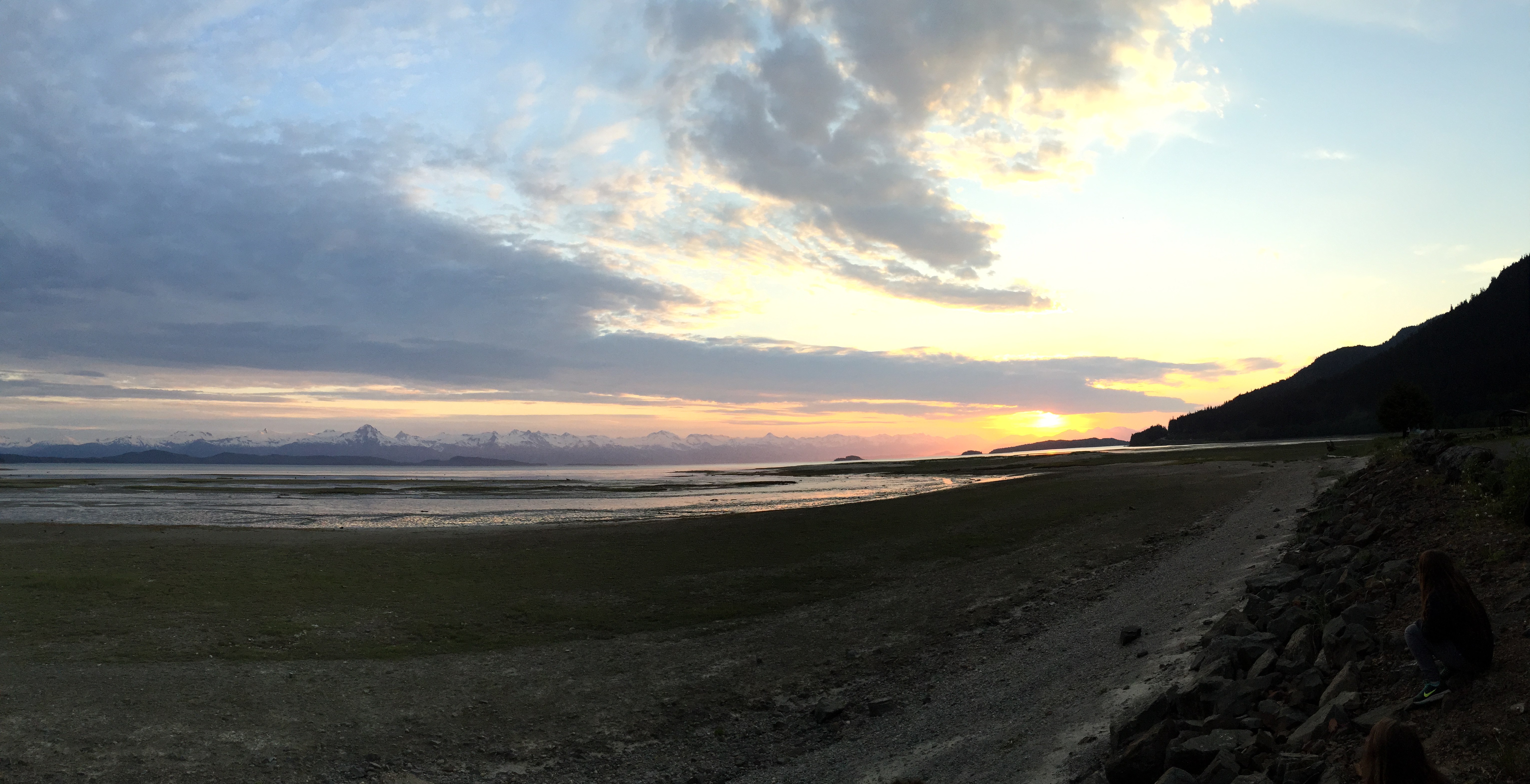
Last night, we chased the Juneau sunset in a prehistoric Chevy van with blue tape marking racing stripes and the number 7. 20-somethings tumbled in together to drive “out the road” in hopes of bear sightings. In Juneau, it really is called out the road – and you can get to the end of the road. I have done it before, five years ago when I was here for the first time.

His mark was in the sun, that golden ball of fire hiding and seeking between clouds. The reflection of rays across the water, causing turquoise light to shimmer in the distance – that was Him, too. The mountains in the distance – a watercolor masterpiece with muted hues and blurry details – corresponded in color with the sunset as purples and blues and deeper blues. Charcoal and ink sketched details in the closer ones, outlining snow still thick in the peaks.

He’s a creative one, our God. We walked out through moss and sand and rocks to get as close as possible to the water, hoping to see evidence of whales. At high tide, that walk would have been a swim, but the edges of the sea regularly move back to expose the life and death underneath her waters. Her highs and lows affect fishermen and coastline residents and explorers like us, so we were careful to watch for her to slowly start moving back up.

IMG_4091

Removing myself from my everyday life this summer is having a similar effect.

It’s as if the tide is changing in me – not in the cliché sense of new directions, but the ebbing of my routines and my relationships and my regular world has begun to expose the life and death in me, the stripping away of the waters to reveal what’s underneath.

The grime and the mud in my heart is sticky, and I can no longer deny the selfishness and the pride that have been resting below. What is it about life changes that cause the change in tide? The good and the bad come out raw, and I am sure that’s an intentional result by a God Whose mark is, after all, on everything.

The low tide exposes what the dark has hidden.

Yet in the midst of the algae-covered rocks and the still-damp floor, there is beauty. There is life growing in what has been hidden from the eye while the high tide held. And with the laying bare of what’s in me, God’s grace is flourishing with life, spilling over even into the places I wish were not there.

In the end, we aren’t qualified or capable to be used by God. We don’t reach a point where we “have it together” so that we can finally live this life on our own. It’s often only in the change in tides that we (are forced to) stop to notice how broken and dead we are on our own – but it’s also in that place where we are able to see the life God has brought in the midst of our lack. It’s then that we can truly say, “Your grace is sufficient for me.”

Even in the ebb of the waters, His mark is there.

connecting my heart to easter weekend

I feel guilty and non-spiritual for making this confession, but here it is: I haven’t been very reflective during this season leading up to Easter.

I haven’t spent time meditating on my sin or my personal need for Christ’s work on the cross.
I didn’t do a devotional plan during Lent that prepared my heart for Easter morning.
The first time I opened up to the Easter story was this morning before church.

I thought often about how I should be doing something more intentional – something to make this season more meaningful. I don’t want to cheapen the significance of Easter into a holiday with a special church service then rushing home to stick the ham in the oven. And while I don’t want to claim that I am more busy now than normal (busy is not an excuse), my mind has been fairly consumed with the home buying process and preparing to close and move next weekend.

I struggle with the road to my heart going through my head – that is, I have a tendency to sometimes think more logically than emotionally about the world around me. I certainly have my sentimental streaks, especially when talking about my stud of a husband. He is really good at the “feeling” stuff, and while I tease him for being overly sappy, my romantic heart bursts that he feels that way about me. I just don’t do a great job of externally communicating my own sappy desires.

And this year with Easter, I have been much more focused on the logic of the holiday rather than the personal feeling of what Jesus’ death and resurrection means. Yet this morning, the roadblock between my heart and my head was removed as I read through Luke’s account of the Easter story before church. God is so good to meet me in those intellectual desires and pursuits, and when facts click together for me, my heart swells up with joy in response to how cool God is.

I read past the part where the women find the empty tomb to the story of the road to Emmaus. Two men are walking seven miles and discussing the current controversial events in town when Jesus shows up (unbeknownst to them) and walks with them. He feins ignorance and lets them re-tell the story of what has happened, then allows them space to confess their confusion that, after the women came back telling about their encounter with the angel, “Some of those who were with us went to the tomb and found it just as the women had said, but him they did not see” (Luke 24:24). It’s as if they are saying they were struggling to believe as clearly as the women did because they didn’t get to see what the women did. Jesus affirms their struggle to believe by addressing them, “O foolish ones, and slow of heart to believe all that the prophets have spoken!” (Luke 24:25)

These two men were having difficulty reconciling all that they had seen happen over the weekend, and while Jesus calls them out on that unbelief, he takes the time to explain to them all that was prophesied and all that was promised. He wants to help them believe! During the meal together, Jesus breaks the bread and blesses it, then reveals His identity to the men just as He vanishes from their presence.

13914167903_462e03dd48_zThe part that grabbed me, though, was their response as they realized who had been walking and talking with them all day – they ran to Jerusalem, found the disciples, and proclaimed, “The Lord has risen indeed!” (Luke 24:34)

This simple phrase is repeated all around me and even voiced by me during this weekend each year, but knowing that it was their proclamation of faith gives a new weight to this statement.

He has risen indeed. We didn’t understand, and it seems incredible, but we now believe Jesus is risen. We wrestled with the facts but we heard all of the prophecies and we see that Jesus came to fulfill them. He is alive! 

I believe that He died for my sins, taking punishment I was meant to take, to provide me with redemption I couldn’t earn. But beyond that, I believe that He conquered death and still lives! He is risen, and because of that sacred weekend, I can experience His grace in a loving, unconditional relationship.

So as you finish off that leftover ham and say goodbye to friends and family, take a moment to think about the confession you are making as you call out, “He is risen!”

He is risen indeed.